
Live Online Death Doula Training
If you're here, something sparked your interest. Maybe you sat with someone you love while they died, and you can't stop thinking about it. Maybe you're a nurse or a hospice volunteer who wants more than rushed interactions. Or maybe you just feel pulled toward this work and you don't know exactly why yet. I paid attention to that pull, and I'm so glad I did.
My death doula training is a 10-week live online cohort through Compass Doula Academy. We meet in the evenings, and you practice the real conversations with real feedback from me. The next cohort starts Thursday, January 7, 2027. Tuition is $1,497, or $1,297 if you enroll by December 20, 2026.
The Steadiness Is the Skill
Here's what nobody tells you. Being there at the end isn't something you have to be born knowing how to do. It can be learned.
I've seen it play out like this. A man hadn't spoken in two days. Then, somewhere around three in the morning, he opened his eyes, looked right at his daughter, and said, "You left the porch light on again." She laughed and cried at the same time. Those were the last words he ever said. Not goodbye. Not I love you. The porch light. And it was perfect. It was love, and it was a beautiful goodbye all on its own.
Moments like that happen in dying rooms more often than you'd think. They're easy to miss when you're overwhelmed and alone. A doula's job is to know what's normal (the breathing that changes, the long sleep, the surprising window of clarity near the end) so you can stay calm while everyone else is coming apart. That calm is what you're learning here. The words, the timing, the knowing when to say nothing at all. The steadiness is the skill, and more people are needed who are willing to learn it.
The January 2027 Cohort at a Glance
Here are the details of the next cohort in one place.
| Detail | January 2027 live online cohort |
|---|---|
| Next cohort starts | Thursday, January 7, 2027 |
| Schedule | Thursdays, 6:00 to 7:30 pm Pacific, for 10 weeks |
| Last class | Thursday, March 18, 2027 (no class February 11) |
| Format | Live on Zoom. Recordings are posted to the student portal within 24 hours. |
| Class size | Up to 30 students |
| Tuition | $1,497. Payment plans are available at checkout. |
| Early enrollment, through December 20, 2026 | $1,297, plus a one-hour session with me |
| Prerequisites | None |
| Materials | The 120-page Compass Doula Academy workbook (digital) |
| Certificate | Certificate of Completion from Compass Doula Academy |
| Included after training | Two bonus sessions in April |
| Continuing education credits | Check with your licensing board |
| Refund | Full refund within 7 calendar days of the first class |
What You Learn in Death Doula Training
You'll also hear this called end-of-life doula training. Same work, same skills. We move from the everyday to the hard stuff, the same way the work does. Six modules, ten weeks. Here's what's in them.
Starting with the basics: what a death doula actually does
What this work is, where it came from, and where it stops. A doula is not medical, not legal, and not anybody's therapist. Knowing your lane is what makes families trust you in it. We cover roles, boundaries, ethics, and your scope of practice.
What dying actually looks like: the dying process
Most of what we think we know about dying comes from TV. Most of it is wrong, and most of it is gentler than we fear. You'll learn how the body changes in the last weeks and days, the signs that death is near, and what brings comfort, along with how to work alongside the hospice team and other professionals.
Holding space without trying to fix it
Active listening. The hard conversations, including the ones a family has been putting off for twenty years. Staying present in the middle of a family fight without picking a side. This module is where most people discover that the urge to fix things is the first thing they have to unlearn.
End-of-life planning
Care plans and advance directives. The legal and financial pieces a family needs to know about (we guide; we don't give legal advice). Funeral, disposition, and vigil planning. The paperwork nobody wants to look at, handled at the family's pace.
Rituals, legacy, and grief
Rituals that fit the person instead of a template. Legacy projects. Grief in all its iterations. And taking care of yourself, because you can't hold everyone else up if nobody's holding you.
The practical side
Working with hospice teams and funeral homes. Building a practice that can actually support you: intake, pricing, and the money conversation most new doulas dread. Bonus sessions with guest speakers round out the training and give you real-world resources before you print up a business card.
What Happens on a Thursday Night
You can read about holding space all day long. You learn it by doing it, a little badly at first, in a room full of people who want you to get better.
Every Thursday, I teach live for 90 minutes, and a good part of most sessions is practice. One of you plays a daughter calling because her dad was just moved to hospice. Another plays the doula picking up the phone. I let the scene run. Then I stop it and we talk about what just happened. What was she really asking? Where did the doula jump in to fix something instead of listening? What's the one thing that would have helped most? Then you run it again.
Families ask me the same question at nearly every bedside: how much longer? I learned the hard way not to give a number. (I once guessed and I was wrong, gulp.) Now I know what to say to help them get through the waiting. That's the kind of thing you can only really learn by saying it out loud, getting it a little wrong, and trying again.
Community posts are for everything else: a real situation you're facing, more practice, and all the questions that show up once you start noticing death everywhere (it happens to a lot of people in the cohort, and yes, it's normal).
Miss a week? The recording is in the student portal within 24 hours. You keep access through graduation, and for six months after if you stay in the Collective.
Who This Training Is For
People find their way to this work from everywhere. In any given cohort you'll meet caregivers, hospice volunteers, nurses, chaplains, and healers who want to add something to work they already do. You'll also meet career changers who are done with jobs that don't mean anything to them, and people who want to be ready when their own parents or partners start to die. And plenty of people show up who simply want to be able to talk about death without being afraid of saying the wrong thing.
A lot of us came to this through a death of our own, often without realizing it at the time. My mother's best friend, Beverly, was dying of ALS. She couldn't lift a knife or a fork anymore, but she could still run a kitchen with her voice, and she ran it. My mom chopped what Beverly told her to chop, and fed her bites of enchilada mid-sentence like it was the most ordinary thing in the world. I was in my 40s, and I had no idea I was watching exactly what I'd spend the rest of my life doing. These moments don't announce themselves. They mostly just look like a Tuesday.
If a moment like that is what brought you here, good. That's a real reason to come. If the death was recent, take an honest look at whether now is the time (there's more on that in the questions below).
Here's who this isn't for. If you're looking for a medical or clinical credential, this isn't it. Death doulas provide non-medical support, and that's the whole point.
Who's Teaching You
I'm Christy Braun, and I'm a working death doula in Placer County, California. I spent two decades in corporate training and consulting before I found the work I was actually built for. Now I sit with dying people and the people who love them, in person around Sacramento and as a tele-doula everywhere else. I've been in the room through active dying, and I've witnessed medical aid in dying. I host the podcast Dying to Ask with Christy B.
I want to tell you about one family, because they changed how I talk about dying with every family since. Their dad, Norm, was in his final days, and his twin daughters were caring for him around the clock.
Around day four, the twins called me with a question about his breathing. They were holding the phone up to his mouth so I could listen. (That's the kind of moment that tells me a family is trusting me. They are handing me their dying father's breath through a phone, and they are waiting for what I say next.) I listened, and I told them, that sounds normal. He's progressing normally.
They stopped me. They said every other professional had been telling them their dad was declining. I told them he was progressing. Same fact, different door. And the door I gave them opened onto something they could actually walk through.
I know what to look for. Most days, that's the whole job. And it's what I teach.
One more thing about me. I came from the corporate world, where if you didn't know something, somebody tried to use that against you. In this work, if somebody doesn't know something, we fill the gap for them. I don't think there's one right way to be a death doula, and I don't think anyone gets to be the gatekeeper. There are no living experts on death. There are just people who've learned to show up, stay curious, and pay attention.
Credentials
- M.S. in Instructional Design, Golden Gate University
- Certified End-of-Life Doula; Certified Advanced Care Consultant
- Reiki Master
- Member Trainer, National End-of-Life Doula Alliance (NEDA)
- MAiD bedside training, American Clinicians Academy on Medical Aid in Dying
- Has supported clients through VSED and MAiD
What a Death Doula Certificate Means
This part confuses almost everyone shopping for a program, so I'll be straight about it.
No government body licenses death doulas in California, and the state doesn't regulate the work. The National End-of-Life Doula Alliance (NEDA) says the same is true nationally: no national, regional, or state body oversees doulas or their standards of practice. When a doula says they're "certified," what it generally means is that they finished a training program and got a certificate of completion.
NEDA does offer something voluntary. Its Proficiency Badge is a micro-credential a doula can earn to show that their knowledge and skills meet NEDA's Scope of Practice and Code of Ethics. NEDA doesn't accredit or evaluate training programs, and it suggests asking any program whether it prepares students for NEDA's assessment before you sign up. Good advice. My course prepares you to sit for NEDA's Proficiency Badge assessment, if you want to. When you finish with me, you get a Certificate of Completion from Compass Doula Academy, you'll have completed your own advance directive, and you'll have gained bedside experience.
Here's the honest part. A certificate can't give you the thing families are actually hiring you for, which is being the steady one in the room. That comes from practice. It's why so much of this course is practice.
What Graduates Say
Here's what a few graduates have said about the training.
"I feel more grounded in holding space and maintaining healthy boundaries."
Clear, compassionate, and well-structured training that builds a strong foundation in end-of-life doula care. The emphasis on presence, active listening, boundaries, and reflective practice was especially valuable. It felt supportive, grounding, and thoughtfully designed.
Parita S.
"I would recommend Christy to anyone who wants to become a Death Doula."
Christy has a wealth of knowledge which she delivers in an upbeat and organized manner. I'm glad to be part of the Compass Doula Collective and inspired to set out on my journey with Christy as a trusted guide.
Andrea M.
"I leave with a stronger foundation for holding compassionate, non-judgmental space."
The small group format was one of its greatest strengths, it created space for thoughtful, genuine conversation. Most importantly, it was a wonderfully non-judgmental environment where every perspective was welcomed and respected.
Corrina K.
"I highly recommend this class."
Christy packed this class with valuable information and made it fun. It was wonderful to get to know others with a similar interest and I feel like I have a network of people to work with and/or get advice or feedback from.
Paula D.
After You Graduate
Finishing the course is where the work starts, not where the learning stops.
- The Compass Doula Collective. Our graduate community and referral network. It's free through graduation, then $11 a month if you choose to stay. Mostly, you get a group of people who understand what you just did.
- Continuing education with me. Master Workshops on the things that come up in real practice.
- The Death Doula Business Accelerator. For graduates ready to turn this into a practice: finding clients, pricing your work, and getting paid. Read about the Accelerator.
What Death Doula Training Costs
Tuition for the live online cohort is $1,497.
If you enroll by December 20, 2026, it's $1,297, and you also get a one-hour session with me. This is personal work, and I want to get to know you. After December 20, tuition goes back to $1,497. That's it. No countdown clock.
Payment plans are available at checkout. If you get into the first class and realize this isn't for you, you can get a full refund within 7 calendar days. Tuition covers 10 weeks of live teaching, community access during the 10 weeks, the recordings, the 120-page workbook, and your Certificate of Completion.
Can You Make a Living as a Death Doula?
The doulas I coach in the Death Doula Business Accelerator do. Income varies a lot, and it depends on the services you offer, how you price them, and how much you want to work and build. Some doulas do this entirely as volunteers, and I respect that choice.
This is where I land, though. This is skilled work, and skilled work deserves to be paid. How much do you pay your therapist? A doula is there at the hardest moment of someone's life. Nobody would expect a therapist or an accountant to work for free.
You won't find a salary number on this page. I haven't found salary data for this field with a real source behind it, and I won't make one up. What drives a doula's income is what we work on in the Death Doula Business Accelerator.
Death Doula Training in California
I'm based in Loomis, in Placer County. The live cohort meets online, so you can train from anywhere, and a lot of my students come from Sacramento, Roseville, Rocklin, Auburn, and the rest of Northern California.
If you'd rather learn in the room, I'm planning an in-person intensive for the third quarter of 2027. The date and place aren't set yet. Add your name to the in-person intensive list and you'll hear about the date, place, and price first. It costs nothing and commits you to nothing.
Because I practice here, the course covers how end-of-life care works in California, including California's End of Life Option Act (medical aid in dying), POLST forms, and home funerals. If you're planning to practice somewhere else, the core skills travel with you. The local rules are part of what you learn how to look up.
Frequently Asked Questions About Death Doula Training
What qualifications do you need to become a death doula?
None are required by law. California doesn't license death doulas, and NEDA notes that no national or state body oversees the practice. What you need is training, practice, and the willingness to be with someone at the end of life without trying to fix it. Most doulas finish a training program and receive a certificate of completion. My course has no prerequisites and prepares you to sit with the dying and their circle of support.
How long does death doula training take?
It depends on the program. My live cohort runs 10 weeks, Thursdays from 6:00 to 7:30 pm Pacific, with bonus sessions peppered in. The January 2027 cohort starts January 7 and wraps March 18. Training gives you the foundation. The rest you learn at the bedside, one family at a time, with the support of the Collective if you choose.
Do I need a medical or hospice background?
No. Death doulas provide non-medical support, and some of the best doulas I know came from teaching, business, the arts, or their own family's caregiving. I came from corporate training and consulting. Nurses, chaplains, and hospice volunteers take the course too, and they bring a lot to the room. Everybody starts with the same foundations, and everybody practices together.
What is the difference between a death doula and a hospice worker?
Hospice provides medical care and comfort at the end of life, through a team of clinicians and staff. A death doula is non-medical. We focus on the practical and emotional side of this work, the person and the family: planning, presence, vigils, legacy work, and grief. Doulas work alongside hospice and fill the hours a hospice schedule can't.
Is a death doula the same as an end-of-life doula?
Yes. Death doula and end-of-life doula describe the same work, so death doula training and end-of-life doula training cover the same ground. You'll also hear end-of-life companion or death midwife (in the US; it means something different in the UK). I say death doula on purpose, because saying the word is part of the work. Whatever you call it, the job is non-medical support for dying people and the people who love them.
Is death doula work licensed in California?
No. California doesn't license or regulate death doulas. NEDA's FAQ says the same across the country: no national, regional, or state body oversees end-of-life doulas, so the practice is unregulated. That makes the training you choose matter more, not less. Look for a program that's clear about what doulas do and what they hand off to someone else.
Will I be certified?
You'll receive a Certificate of Completion from Compass Doula Academy. Because no government body licenses doulas, being certified in this field generally means you finished a training program. NEDA also offers a voluntary Proficiency Badge, a micro-credential showing a doula's skills meet its standards. Compass Doula Academy prepares you for that assessment.
Are end-of-life doulas in demand?
I can't point you to a reliable count, and I won't quote a number without a source. What I can tell you is what I see. More families are asking for this kind of support, and more hospice social workers and other professionals are referring to doulas. Demand for any one doula comes down to relationships, which is why we talk about how to build them.
How much do end-of-life doulas get paid?
It varies a lot, depending on the services a doula offers, how they price them, and how much they want to work. Some doulas volunteer. I charge $125 an hour and offer prepaid packages, and as demand increases, so will my rate. I don't publish salary figures, because I haven't found any with a reliable source.
Should I wait if someone close to me died recently?
Maybe. A lot of us found this work because of a death in our own lives, and that experience can make you a better doula. But this course asks you to look closely at dying, every week, and fresh grief can make that very hard. If the death was in the last few months, be honest with yourself. A conversation with me before you enroll can help you decide if now is the right time.
What if I miss a live session?
Every session is recorded and posted to the student portal within 24 hours. You'll miss that week's live role play, so bring your questions and your practice to the next session. Life happens over ten weeks. People get sick, kids get sick, and sometimes the person you're caring for needs you. The course is built for that.
Is there an in-person option?
One is on the way. I'm planning an in-person intensive for the third quarter of 2027, and the date and place aren't set yet. Add your name to the interest list on the Compass Doula Academy site and you'll hear first. Until then, the live online cohort gives you weekly role play and feedback from me, and you can train from anywhere.
Do you offer continuing education credits?
The course may count toward continuing education credits for nurses, social workers, or other licensed professionals. Check with your licensing board. Graduates keep learning through the Compass Doula Collective and my continuing education workshops, which keep your skills sharp long after the ten weeks are over.
What technology do I need?
A computer or tablet with a camera and microphone, a decent internet connection, and the free Zoom app. Classes meet on Zoom, and the recordings and the digital workbook live in the online student portal. That's it. If Zoom is new to you, we'll get you set up before the first class.
Are payment plans available? What is the refund policy?
Yes. Payment plans are available at checkout. If you decide the course isn't right for you, you can get a full refund within 7 calendar days of the first class. Tuition is $1,497, or $1,297 if you enroll by December 20, 2026, which also includes a one-hour session with me for individual attention.
How many students are in a cohort?
Up to 30. That's big enough to give you a real network of peers, and small enough that I can coach role play and answer questions every session. The community gives you more time with me and with your classmates between Thursdays.
If This Is the Work Calling You
There are no living experts on death. There are people who've sat with it enough times to know what to look for, and who can stay steady when a family holds the phone up so you can hear their dad breathe. That steadiness can be taught. It takes practice, and it takes people around you who want you to get it right.
If you've felt the pull, pay attention to it. Come find me. The next cohort starts Thursday, January 7, 2027. Enroll by December 20, 2026, for $1,297 and a one-hour session with me.
Still have a question you're dying to ask? Book 15 minutes with me.
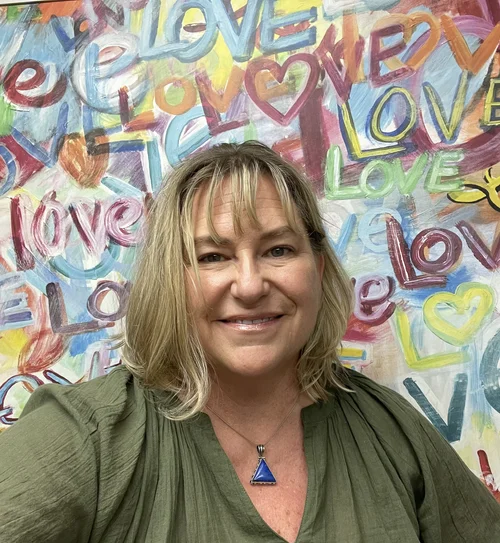
About Christy
Christy Braun is a death doula and educator in Placer County, California, and the host of the podcast Dying to Ask with Christy B. She holds an M.S. in Instructional Design from Golden Gate University. She is a Certified End-of-Life Doula and a Certified Advanced Care Consultant. She is also a Reiki Master and a Member Trainer with the National End-of-Life Doula Alliance (NEDA). She teaches new death doulas through Compass Doula Academy.
Last updated November 7, 2026.