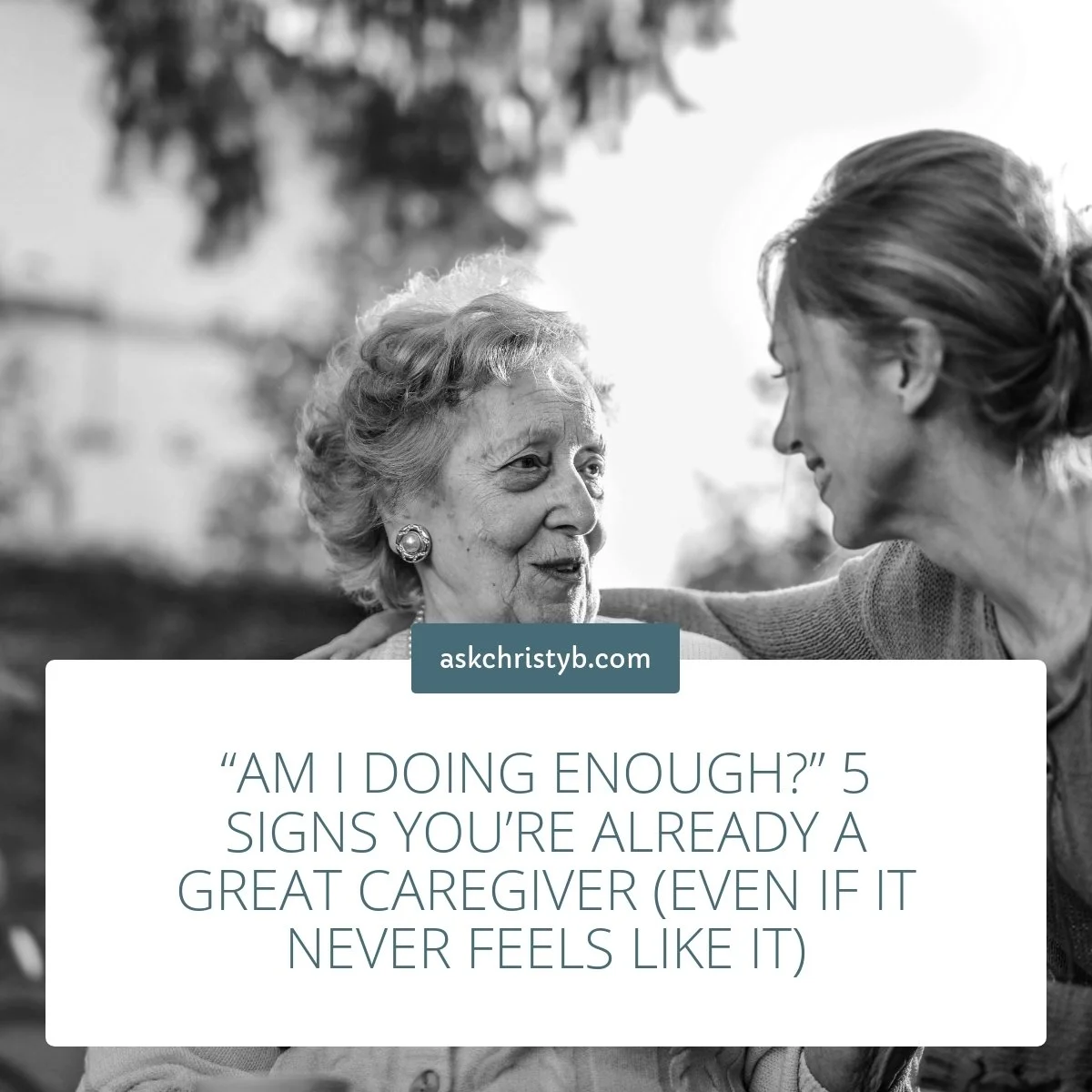
“Am I Doing Enough?” 5 Signs You’re Already a Great Caregiver (Even If It Never Feels Like It)
Many caregivers ask, “Am I doing enough?” especially when exhaustion, grief, and uncertainty cloud the day-to-day. If you're caring for a loved one nearing the end of life, it may feel like you're constantly falling short. But the truth is: your presence, your love, and your small acts of care already mean more than you realize. This post offers five signs that you're already a great caregiver—even if it never feels like it. You don’t have to do this alone, and you don’t need to be perfect to bring peace and dignity to your loved one’s final chapter.
Sign 1: You’re Present, Even in the Quiet Moments
When your loved one sleeps more or becomes less responsive, it’s easy to wonder if you’re doing enough. But sitting beside them, holding their hand, or speaking softly—even when they don’t respond—offers deep comfort.
Hearing is often the last sense to fade. Your voice, your presence, and your calm energy still reach them. These quiet moments, where nothing needs to be fixed or said, are powerful acts of love.
You don’t need to fill the silence or stay busy to prove your care. Simply being there is enough. Your presence is a gift they can still feel.
Sign 2 : You Soothe Without Needing to Fix Everything
End-of-life restlessness can be unsettling. You may notice your loved one fidgeting, breathing irregularly, or seeming agitated. When you respond with gentle touch, soft music, or simply sitting nearby, you’re already doing something meaningful.
You’re not trying to control the moment. You’re offering peace and that matters.
Avoiding restraint or force, even when things feel out of control, shows deep respect for their autonomy. Comfort care isn’t about solving every symptom. It’s about creating a space where they feel safe and seen.
Hospice teams can help guide you, but your instincts are already serving them well.
Sign 3: You Advocate for What Matters to Them
Even without a formal advance directive, you speak up for what your loved one would want. You ask questions. You coordinate with hospice and your doula. You make sure their values (not just their symptoms) are part of the care plan.
Maybe you play their favorite music. Maybe you request a chaplain or spiritual counselor. Maybe you remind the care team that they always wanted to be at home, surrounded by family.
In California, hospice teams follow POLST forms and patient-led preferences. Your voice helps guide that care. You are their advocate, and that advocacy is an act of deep love.
Sign 4: You’re Seeking Support, Not Just Pushing Through
You’ve looked for help, maybe through hospice, a caregiver support group, or even by reading this blog. That’s wisdom. You are making sure that you are resourced to serve at your best.
Caregiving is heavy. You’re not meant to carry it alone.
California’s Caregiver Resource Centers offer free respite care, emotional support, and guidance. Hospice also provides grief counseling for up to 13 months after death, because caregiving doesn’t end when life does.
Reaching out doesn’t mean you’re failing. It means you’re human. And it means you care enough to make sure both you and your loved one are supported.
Sign 5: You Recognize When You’re Overwhelmed
If you’re feeling exhausted, numb, or like you’re running on empty, that’s not a sign of failure. It’s a sign that you care deeply and that you need care, too. Why are people underwhelmed or overwhelmed but never just “whelmed?” … I digress.
Burnout is common among caregivers. But it doesn’t have to be your baseline.
Hospice consults are free and can begin even before a doctor recommends them. You can call the NHPCO Helpline (800-658-8898) or the California Hospice Association to explore your options.
You deserve support, rest, and relief. Recognizing your overwhelm is the first step toward getting the help you need.
You’re Not Alone. Let’s Make This Easier.
You don’t have to figure this out on your own. As a death doula, I help simplify the overwhelming details and create space for peace, clarity, and connection. And levity. Levity is a crucial part of the process that is often overlooked. If you’re ready to feel more confident and supported, book your free Guided Care Planning Call today. Together, we’ll make sure your caregiving reflects love—not pressure. Start your journey toward peace of mind now.
FAQs
How do I know if hospice fits without a doctor’s push?
You or your loved one can initiate hospice care. Frequent ER visits, unmanaged symptoms, or a decline in daily functioning are signs that hospice might help. You don’t need to wait for a doctor to bring it up. Hospice teams can assess eligibility and guide you through the next steps.
What CA resources exist for caregiver burnout?
California’s Caregiver Resource Centers offer free support, including respite care, counseling, and education. These services are designed to help you manage stress, avoid burnout, and feel less alone in your caregiving role. You can find your local center at canhr.org.
How to discuss death doula support alongside hospice?
Death doulas work alongside hospice teams to provide emotional, spiritual, and practical support. Your decision to be supported by a doula is deeply personal. Call a few in your area and get a feel for their personality and the ways they can support you. Not every doula offers the same set of services so do a little research and find an end-of-life practitioner that resonates with your needs.I have a host of referrals nationwide and I am always happy to make introductions. This is how we come back to our humanity…shoulder to shoulder in the spaces that push, pull and shape us.