
Medical Aid in Dying (MAiD) Support from a Death Doula
Medical aid in dying is a legal option in California for an adult who is terminally ill and can make their own medical decisions. You can ask your doctor for a prescription, and then you decide whether to take it. The law is called the End of Life Option Act. A death doula is the non-medical person who walks the whole way with you.
If you're reading this, you're either thinking about medical aid in dying for yourself, or you're sitting next to someone who is. Either way, I'm glad you're asking. It's a hard question to ask.
Medical Aid in Dying in California Starts with You
Before we get to doctors and forms, let's start where the law starts: with you. The medical aid in dying requirements are short and strict, and every one of them is about you. To qualify, you need to be:
- 18 or older.
- Living with a terminal disease that two doctors agree is incurable and expected to cause your death within six months.
- Able to make your own medical decisions. That means you understand the choice, its benefits, its risks, and the other options, and you can make the decision and tell your doctor.
- A California resident who can show it, with a California driver's license or state ID, voter registration, property you own or lease here, or last year's California tax return.
- Able to take the medication yourself.
And you have to ask for it yourself. Not your daughter, not your health care agent, not your advance directive. You. Age or a disability, by itself, doesn't qualify anyone.
I know that "six months" can land like a punch. Take a breath. You don't have to decide anything today. You're allowed to just be someone who's asking.
I'm also going to be a little nosy here. If the biggest reason you're asking is that you don't want to be a burden, tell me. That's worth exploring, and it's worth talking through before you decide anything. I won't talk you out of medical aid in dying. I won't talk you into it either.
Getting Medical Aid in Dying, Step by Step
Once you know you qualify, here's the road. Yes, there's paperwork. Of course there's paperwork.
How long it takes depends a lot on your doctor. Going through a hospice can take weeks. I work with concierge doctors who can shorten that to days. So if your own doctor says no, or time matters, tell me early.
| Step | What the law requires | What I do |
|---|---|---|
| 1. Find a doctor who takes part | Taking part is voluntary for doctors and facilities (section 443.14(e)). | If your doctor says no, or the timeline is too long, I can refer you to a concierge doctor whose practice is devoted to MAiD. |
| 2. Make two oral requests | Two oral requests to your doctor directly, at least 48 hours apart (section 443.3(a)). | I track the dates and help you write down your questions. |
| 3. Sign the written request | You sign the request form in front of two adult witnesses (sections 443.3(b) to (d) and 443.11). | I explain who can witness. |
| 4. See a second doctor | A consulting physician examines you and confirms the diagnosis and prognosis in writing. If there are signs of a mental disorder, a psychiatrist or psychologist sees you too (sections 443.6 and 443.5(a)(1)(A)). | I keep the calendar so appointments don't sneak up on you. |
| 5. Talk alone with your doctor | Your doctor asks you privately (an interpreter aside) whether anyone is pressuring you, and counsels you about having someone present, not taking the drug in a public place, telling your next of kin, hospice, and safe storage (sections 443.5(a)(4) and (5)). | I step out for the private part. Each counseling point then becomes one of our planning conversations. |
| 6. Get the prescription | The medication can be delivered to you, your doctor, or a person you name (sections 443.5(b) and (c)). | We decide where it stays safe until you're ready, or until you decide not to use it. |
| 7. The day itself | You take the medication yourself (sections 443.1(q) and 443.2(a)(5)). | I give practical support: setting up the room, guiding your family through the plan, and staying with you all. I don't give you the medication or help you take it. |
| 8. After the death | Leftover medication must be delivered to the nearest qualified disposal facility or, if none is available, disposed of lawfully (section 443.20). | I stay with your family, help with the first phone calls, and help find where the leftover medication goes. |
Two parts of that list surprise people. The first is the private talk. Your doctor will ask to speak with you alone, to make sure nobody is pushing you. That conversation belongs to you.
The second is the witnesses. You need two adults to watch you sign your written request. Only one of them can be a relative or someone who inherits from you, and the two doctors handling your request (plus any mental health specialist who saw you) can't do it. I can be one of your two, as long as I know you well enough to honestly say you're doing this of your own free will. (I take that part seriously. It's my name on the line next to yours.)
Planning the Day of Medical Aid in Dying with a Death Doula
Not long ago, a woman I'd worked with before called me. Her husband had an aggressive cancer. He'd chosen medical aid in dying, and she said, I want you here with me.
So I went to their house and met him. He was a quiet man (the TV was on the whole time, so we weren't exactly hanging out). She showed me around the house and told me about the art he'd made. I start with a visit like that, because it's how I learn what matters to you and your family before the day comes.
I referred them to a concierge doctor whose whole practice is MAiD. On the day, she met me on the front porch and put the medication in my hand. It was very light, and it was very heavy. We sat on the top step and went over the pharmacy's instructions, with joggers going about their day and a dog barking. (Tucked in with the instructions was a survey asking us to rate the pharmacy's service. Seriously?!?!?!)
Later, we sat on that same porch integrating her experience. A little while after that, she brought out his favorite margaritas, and we toasted him.
When we plan your day, we'll talk through things like:
- Where it happens, down to which chair or bed.
- Who's in the room, and who would rather wait in the kitchen or at their own homes.
- What you want to hear: music, a reading, the TV, quiet.
- Who calls hospice or the mortuary afterward, and when.
What if it takes longer than you expect?
Beverly was my mother's best friend. She had ALS, and she was a force to be reckoned with. When Beverly took the medication, she fell asleep within about 20 minutes. Her death took over 18 hours. Her family was with her that whole time, waiting, and nobody could explain why it took so long. It was excruciating.
Your doctor will tell you this can happen. It's written right into the request form you sign. So we plan for a long day too: who sleeps in shifts, and who has permission to step outside and breathe.
If you want to know more about Beverly, I tell her story on my podcast, in What I Learned Watching My Mother Feed Her Friend.
Who can be in the room?
At home, that's your call. Being with you when you take the medication isn't, by itself, something anyone can be sued or charged for. Only you can take it. I can stay in the room with you and your family while you do. I don't give the medication to anyone, and I don't help anyone take it.
If you're in a hospital or a hospice facility, that facility can keep its own staff, and others on its premises, from taking part, including being in the room. Ask about that early. At home, a hospice's policy doesn't decide whether I can be with you, because I'm independent and not under contract with any hospice.
How do I handle friends and family who don't agree with my choice?
You don't need anyone's permission. Your doctor will encourage you to tell your next of kin, but you can't be turned down for deciding not to. The request form even asks you to mark whether you've told your family, decided not to, or have no family to tell.
When there's a fight, in my experience it's rarely the people the decision affects most directly. It's usually an outlier. It's Aunt Janice or Cousin Derrick. I'll help you figure out what, if anything, to tell them. And to anyone who needs to hear it, I'll say this: I see how strongly you feel about this. I understand that what you'd choose for yourself may differ from that of your closest family and friends. The choice belongs solely to the individual.
What a Death Doula Won't Do During MAiD
A death doula, also called an end-of-life doula, does non-medical work. Your doctors decide whether you qualify, and they write the prescription. I don't give you the medication, and I don't help you take it.
I also won't push you either way. I'll ask a lot of questions, and some of them will be uncomfortable. If I think you're making a choice to keep the peace with someone else, I'm going to ask you about that. Gently. But I'm going to ask. And if you change your mind, at any point, right up to the last moment, that's your right, and I'll be just as much in your corner.
Is the California End of Life Option Act Still in Effect?
Yes. In 2025 the California Legislature removed the law's January 1, 2031 expiration date. California's End of Life Option Act now continues with no end date, and the California Department of Public Health says the same. You'll find more background in my longer guide, What Is Medical Aid in Dying?
MAiD, VSED, and Living Outside California
VSED means voluntarily stopping eating and drinking. It doesn't involve a prescription, and it isn't part of the End of Life Option Act. I've supported clients through VSED too, and you can read about it on my VSED support page.
If you live outside California, California's law isn't open to you, because it requires California residency. Other states have their own laws and their own rules. I can still offer non-medical tele-doula support while you follow your state's process.
Why Work with Me as Your Medical Aid in Dying Doula?
There are no living experts on death, and I'm not going to pretend to be one. What I bring is this: I've witnessed medical aid in dying, and I've completed MAiD bedside training through the American Clinicians Academy on Medical Aid in Dying. I'm independent, which means I work for you and your family, not for anyone else.
I come to you in person in Placer, El Dorado, and Sacramento Counties, and anywhere within about 100 miles of Sacramento. Beyond that, I work as a tele-doula, or we work out special arrangements case by case. I keep my caseload small on purpose, and I'd rather tell you that now than on a hard day.
If you're still deciding, or you're the one helping someone decide, a first call is a good place to start. Ask me anything. There's no obligation to go further. Schedule a call with Christy.
Frequently Asked Questions About Medical Aid in Dying
Can a family member or my health care agent ask for MAiD for me?
No. The request has to come from you, directly. It can't be made through a power of attorney, an advance health care directive, a conservator, a health care agent, or anyone else who makes decisions for you. Your family can help you in a hundred ways. Asking for this isn't one of them.
Can I change my mind about medical aid in dying?
Yes, at any time. You can withdraw your request, or decide not to take the medication, no matter what your state of mind is. Your doctor has to offer you the chance to withdraw before writing the prescription. And you can fill the prescription and still decide not to use it at all.
How long does medical aid in dying take to arrange?
It varies. The law requires two oral requests to your doctor at least 48 hours apart, plus a written request and a second doctor's review. Going through a hospice can take weeks. The concierge doctors I work with can often finish the process in a few days. If time matters, tell me early.
Does someone have to be with me when I take the aid-in-dying drug?
No, the law doesn't require it. Your doctor will talk with you about why it helps to have someone there. Hospitals and hospice facilities have to post their MAiD policies on their websites, so it's worth reading yours. If you'd like me there, I can be in the room along with whoever else you choose.
Will medical aid in dying affect my life insurance?
Under California law, taking the medication has no effect on a life, health, or annuity policy beyond what a natural death from your illness would have. An insurer also can't change whether it sells you a policy, or what it charges, because you asked for or withdrew a request. Still, I'm not an insurance agent, so check your own policy.
Is medical aid in dying considered suicide in California?
No. California law says that actions taken under the End of Life Option Act aren't suicide, assisted suicide, homicide, or elder abuse. The law doesn't cover lethal injection or euthanasia; you take the drug yourself. And a person who acts within the End of Life Option Act can't be prosecuted for aiding a suicide. The cause of death on the death certificate is the underlying illness.
Do I have to be on hospice to use MAiD?
No. Your doctor will talk with you about the value of hospice, but it isn't a requirement. If you are on hospice, ask early whether its staff can be with you. A hospice facility can keep its staff, and others on its premises, from being present when you take the medication. At home, I can be there either way.
What if my doctor won't participate in medical aid in dying?
That's allowed; taking part is voluntary for doctors. A doctor who says no still has to tell you so, note the date you asked, and transfer your records if you ask. A new doctor can't ignore an oral request already in your medical record just because you made it to a different doctor. I can refer you to a concierge doctor who does this work.
What happens to leftover medication after a death?
Whoever has the unused medication has to take it in person to the nearest place that properly disposes of controlled substances. If there isn't one, it has to be disposed of lawfully under the California State Board of Pharmacy's guidelines or through a DEA-approved take-back program. I'll help your family figure out where to take it.
Can a person with dementia use medical aid in dying?
The law requires that you can make your own medical decisions and that you can take the medication yourself. No one can ask for it on your behalf, including through an advance directive. So if dementia has affected those abilities, MAiD under California's law may not be available. That's your doctors' call to make, not mine.
How much does a death doula cost for MAiD support?
I charge a flat rate for MAiD support, based on your situation. We'll talk about it up front. I don't bill insurance or Medicare. The first call costs nothing, and it's how we find out whether I'm the right fit.
Ready to Talk with a MAiD Doula?
Maybe you've already asked your doctor. Maybe you're just starting to wonder. Either way, you don't have to plan this alone. Bring me every question you're dying to ask.
Legal Sources
Everything this page says about the law comes from these official California sources.
- California Health and Safety Code, sections 443 to 443.22, the End of Life Option Act, the law this whole page describes.
- California Probate Code section 4609, which defines capacity.
- California Penal Code section 401, on aiding suicide and the End of Life Option Act.
- SB 403 (2025), which removed the law's expiration date.
- California Department of Public Health, End of Life Option Act, including the patient request form.
About Christy
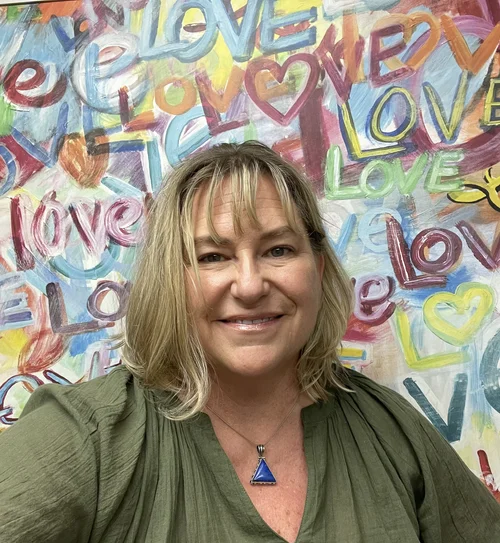
Christy Braun is a death doula and educator in Placer County, California, and the host of the podcast Dying to Ask with Christy B. She holds an M.S. in Instructional Design from Golden Gate University. She is a Certified End-of-Life Doula and a Certified Advanced Care Consultant. She is also a Reiki Master and a Member Trainer with the National End-of-Life Doula Alliance (NEDA). She completed MAiD bedside training through the American Clinicians Academy on Medical Aid in Dying. She has been in the room through active dying, has witnessed medical aid in dying, and has supported clients through VSED.
Legal information current as of November 2, 2026. Last updated November 7, 2026.
This page is general information, not medical or legal advice. Talk with your own doctors about your care.